Dog Park Etiquette: Sharing Toys Edition
Dog parks are wonderful places for our furry friends to socialize, burn off energy, and just be dogs. But bring a squeaky toy into a crowded off-leash area, and things can get complicated fast. Resource guarding, toy theft, and overstimulated dogs can turn a relaxing outing into a stressful one.
Understanding dog park etiquette, especially when it comes to toys, helps keep everyone safe and happy. Here is your complete guide to navigating the toy situation at the dog park.
Should You Bring Toys to the Dog Park?
This is the first question every dog park regular faces, and the answer depends on several factors:
- The park rules: Some dog parks explicitly prohibit toys. Always check posted signs before unpacking your toy bag.
- The crowd: An empty park with just your dog? Toys are great. A packed park with 20 unfamiliar dogs? Maybe leave the toys in the car.
- Your dog temperament: Does your dog share willingly, or do they guard their possessions? Be honest about this.
Understanding Resource Guarding
Resource guarding is a natural canine behavior where dogs protect things they value, including food, bones, sleeping spots, and toys. Even the friendliest dog might show guarding behavior when a stranger dog approaches their favorite squeaker.
Signs of resource guarding include stiffening when another dog approaches, hovering over the toy with a lowered head, growling, snapping, or whale eye (showing the whites of their eyes), and grabbing the toy and running to a corner.
If your dog shows these behaviors, it is best to enjoy toys at home or during private play dates instead. A toy like the Fried Chicken Interactive Toy with its SnackStash treat slots is perfect for at-home enrichment sessions where your dog can enjoy it stress-free.
The Community Toy Approach
Some experienced dog park visitors bring toys they are willing to share or even lose. The idea is simple: you toss a ball or toy, and whichever dog gets it, gets it. No chasing dogs down to retrieve your toy.
If you take this approach, bring toys that are affordable enough that you will not be upset if they disappear, large enough that no dog can accidentally swallow them, durable enough to withstand multiple dogs chewing on them, and free of small parts that could break off.
PAWTY toys are built tough with our GentlePlush 3-layer fabric construction. Something like the Barky Balls can withstand the chaos of multi-dog play while keeping everyone entertained.
Reading the Room
Great dog park etiquette starts with observation. Before you even enter the gate, take a moment to assess the situation. How many dogs are inside? Are they playing calmly or is the energy already high? Are other people using toys? Do any dogs seem overly aroused or reactive?
If the energy is calm and there are only a few well-socialized dogs, introducing a toy can enhance playtime. If dogs are already wrestling and running at full speed, adding a high-value toy to the mix is asking for trouble.
Toy Types That Work Best at Dog Parks
Not all toys are equally suited for the dog park environment. Good choices include balls large enough not to be a choking hazard, frisbees and flying discs, and sturdy rope toys for group tug. Risky choices include squeaky toys (the sound can trigger prey drive and competition), treat-stuffed toys (instant resource guarding magnet), and small plush toys (can be torn apart by multiple dogs).
What to Do If Another Dog Takes Your Toy
It is going to happen. You throw a ball for your dog, and someone else Labrador intercepts it at full speed. Here is how to handle it gracefully: stay calm and do not chase the other dog as this turns it into a game. Ask the owner politely to grab it from their dog. Let it go if needed because if the other dog will not release it and the owner is not helpful, it is just a toy. Your dog safety is worth more. Do not grab toys from unfamiliar dogs since you do not know their bite history.
When Your Dog Takes Someone Else Toy
If your dog is the thief, take responsibility immediately. Call your dog, retrieve the toy, and return it with an apology. If your dog will not come when called in exciting environments, that is a training opportunity.
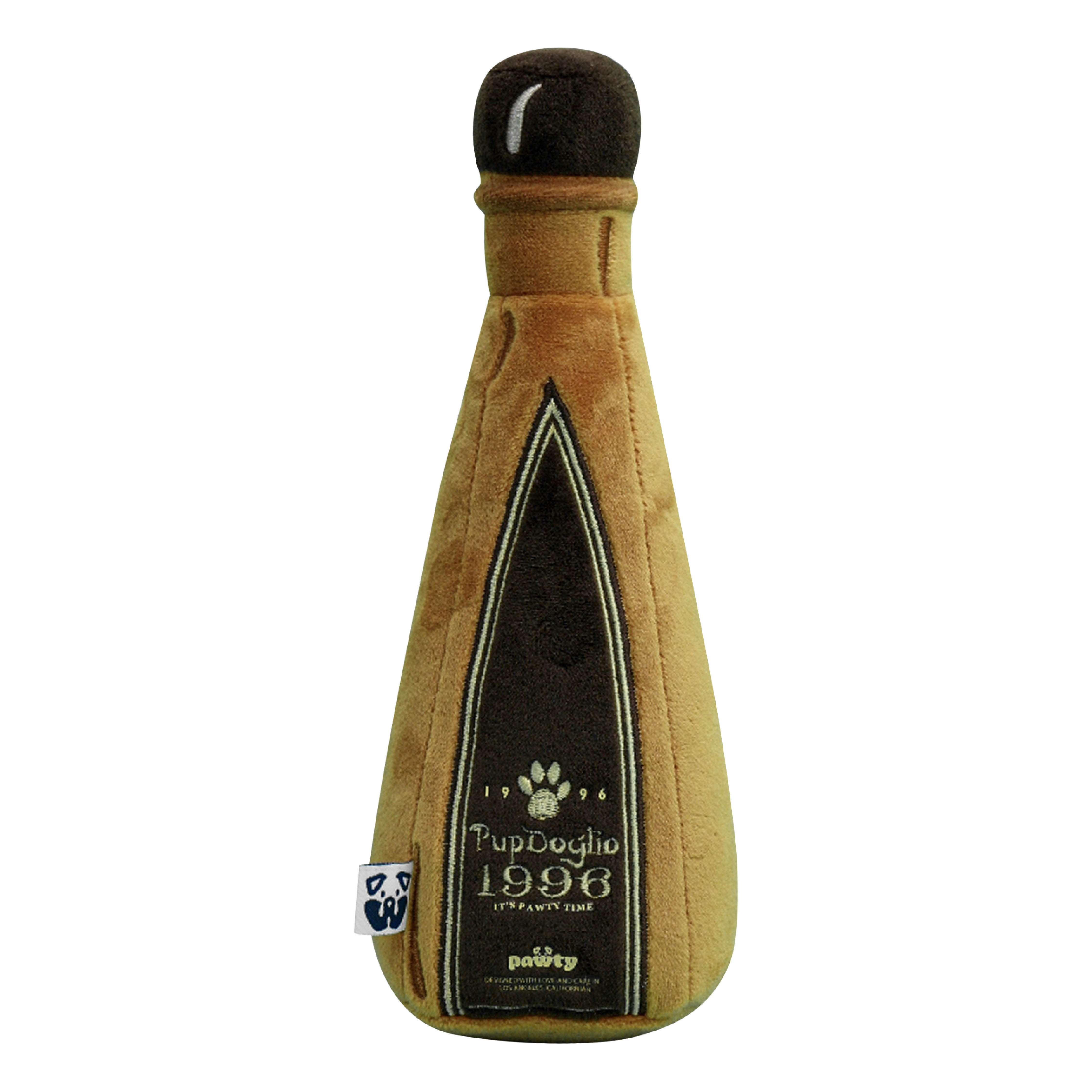
Practice solid recall at home before relying on it at the park. Use high-value rewards like a quick game with their favorite Champagne Bottle Plush Dog Toy when you get home to reinforce that coming when called always pays off.
Creating Positive Park Experiences
The best dog park visits often do not involve toys at all. Dogs benefit enormously from simply running, sniffing, and socializing with other dogs. If you find that toys consistently create tension, leave them at home and let your dog enjoy the social experience.
When you get home from the park, that is the perfect time to break out their favorite PAWTY toy for a cool-down play session. Your dog gets the best of both worlds: socialization at the park and interactive play at home.
Building a Home Toy Collection
Since many toys are better suited for home play, consider building a rotation of fun toys your dog can enjoy in a controlled environment. The Coffee Cup Plush Dog Toy with its SuperSqueak adjustable squeaker is a great option for living room play where you control the environment.
Dog parks are about community, both for dogs and their humans. By being thoughtful about when and how you use toys, you will be the kind of park visitor that everyone appreciates. And your dog will still get plenty of toy time at home, where they can squeak, tug, and snuggle to their heart content.