You probably picked out your dog's toys based on what caught your eye. That bright red ball? The neon green rope? Totally fair -- they look great to you. But here is the thing: your dog is living in a completely different visual world, and most of what you see as vivid, eye-catching color barely registers for them.
Let's break down what is actually going on behind those big, beautiful puppy eyes.
The Myth: Dogs See in Black and White
This one has been floating around forever, and it is flat-out wrong. Dogs do see color -- just not the same range we do. The idea that dogs live in a grayscale world is outdated science from the mid-20th century. Researchers have since proven that dogs have dichromatic vision, meaning they see a limited color spectrum compared to our trichromatic (three-cone) setup.
So no, your dog is not watching the world like an old film noir. They have got color in their life -- just a different palette than yours.
What Dogs Actually See: Blue, Yellow, and a Whole Lot of Gray
Here is where it gets interesting. Dogs have two types of color receptors (cones) in their eyes, compared to our three. Their cones are sensitive to blue and yellow wavelengths. That means:
- Blue looks blue to your dog. Clear and vivid.
- Yellow also comes through strong.
- Red and green? Those blend together into a muddy brownish-yellow. Your dog genuinely cannot distinguish between a red toy on green grass the way you can.
- Purple likely appears as just another shade of blue.
- Orange probably looks like a dull yellow to them.
Imagine looking at the world through a filter that strips away reds and greens and replaces them with muted yellows and browns. That is roughly what your pup is working with every single day.
Why This Matters for Playtime
Think about the classic scenario: you toss a bright red ball onto a green lawn and wonder why your dog runs right past it. It is not a training problem. To your dog, that red ball against green grass is basically brown-on-brown. They are relying on movement, scent, and shape to find it -- not color contrast.
Blue and yellow toys, on the other hand, pop against most backgrounds. A bright blue tug toy on grass? Your dog can spot that easily. A yellow plush on a gray couch? Same deal -- high visibility.
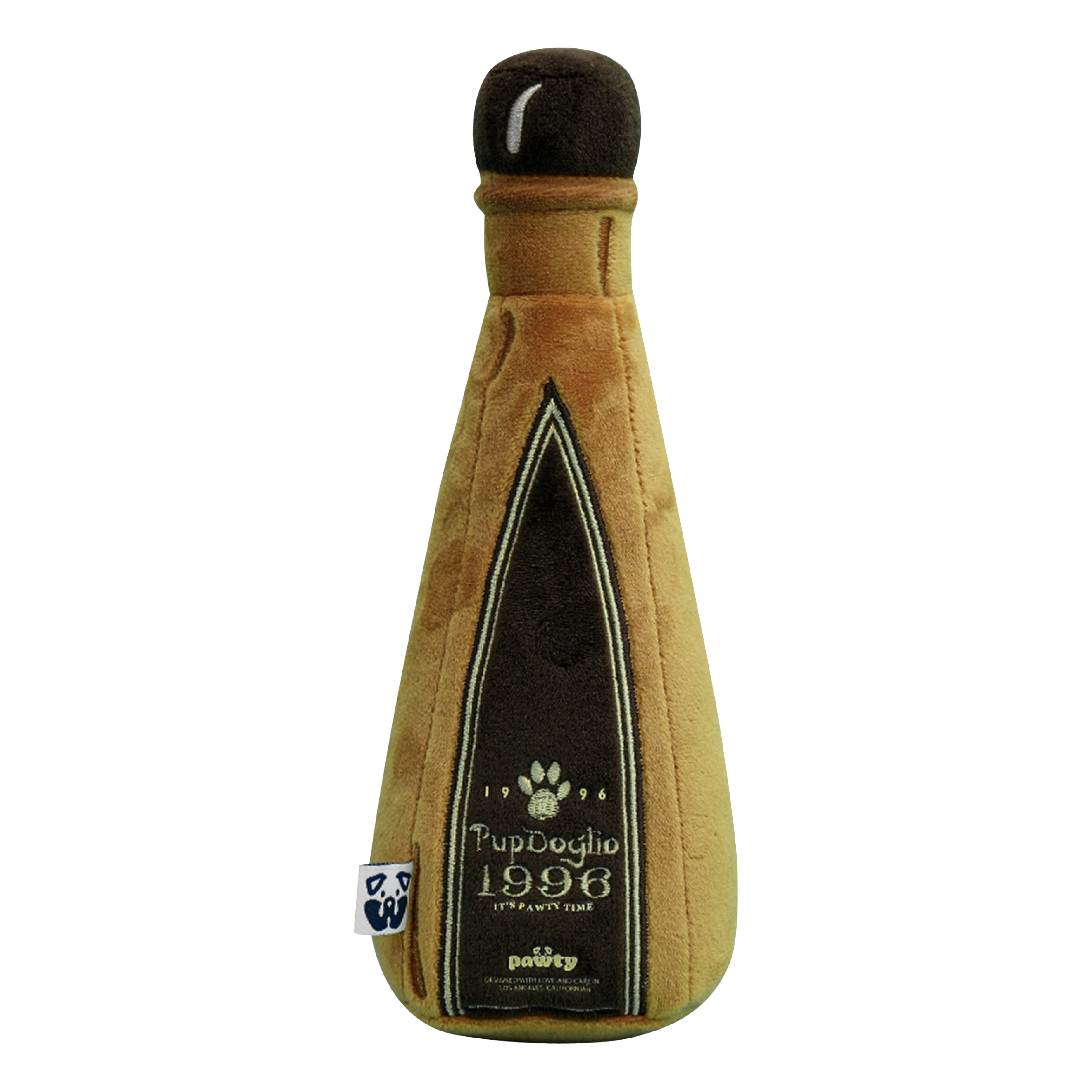
This is actually one of the reasons we love designing toys that work on more than just color appeal. Our PAWTY Sneakers plush toy, for instance, has a distinctive shape and built-in squeaker that dogs lock onto regardless of what color their eyes register. When a toy has the right texture, the right squeak, and the right chewability, color becomes just one piece of the puzzle -- and honestly, not the most important one.
Dogs Beat Us in Other Ways
Before you feel too sorry for your pup's limited color range, consider what they have that we do not:
- Superior motion detection. Dogs can spot movement at much greater distances than humans. That squirrel 200 yards away? They saw it before you even looked up.
- Better night vision. Dogs have a reflective layer behind their retinas called the tapetum lucidum (that is what makes their eyes glow in photos). It essentially gives light a second pass through their retinas, making them far better at seeing in low-light conditions.
- Wider field of view. Most dogs have about 250 degrees of visual field compared to our roughly 180 degrees. They are literally seeing more of the world around them at any given moment.
So while they might not appreciate the full color spectrum of a sunset, they are picking up on things in their environment that are completely invisible to us.
What This Means for Choosing Toys
You do not need to overhaul your dog's entire toy collection based on color science. But if you have ever noticed your dog seems to favor certain toys over others, color visibility might be playing a role. Toys in the blue and yellow range are naturally easier for dogs to see and track during play.
More importantly, dogs choose toys based on a combination of texture, sound, scent, and how satisfying they are to chew and shake. A well-made plush toy with a good squeaker will always win over a visually striking toy that falls apart in five minutes.
The Bottom Line
Your dog is not colorblind, and they are definitely not seeing in black and white. They just experience color differently -- heavier on blues and yellows, lighter on reds and greens. Understanding that is a small thing, but it is one more way to see the world from their perspective. And honestly, that is what being a good dog parent is all about.
Looking for toys your dog will love no matter how they see them? Check out the full lineup of plush toys at PAWTY -- designed for dogs who play hard and owners who want something that actually lasts.